

♦ Last Updated on January 20, 2026 ♦
970 words, 5 minutes read time.
Dear readers—fellow travelers in theology, philosophy, cognitive science, sociology, and the empirical quest for understanding the mind—I’ve been pondering a deceptively simple yet profound question: What truly constitutes intelligence? Am I intelligent? After a lot of reading in my life, I have an inkling of an idea. And today I got Grok to write up this post to share with you.

We often measure it through IQ tests, creative output, or adaptive success, but these feel like surface phenomena. At a deeper level, intelligence seems to hinge on something more fundamental: the capacity to make robust inferences that enable accurate predictions about the world—events, behaviors, actions, and even the hidden motives of others.
Consider this: Every intelligent act, from a chess grandmaster anticipating an opponent’s move to a sociologist interpreting shifting cultural norms, rests on inferring patterns from incomplete data and projecting them forward. Without strong inference, prediction falters; without reliable prediction, survival, innovation, and social coordination become precarious. This view aligns with emerging theories in neuroscience and AI, which increasingly view the mind (biological or artificial) as a prediction engine. But let’s explore this curiously: Is inference not just a tool of intelligence, but its very core? And if so, how have thoughtful minds across disciplines illuminated this idea?
Inference: The Bridge from Evidence to Expectation
Inference is the mental process of deriving conclusions from premises—whether those premises are sensory data, past experiences, or social cues. Philosophers have long dissected it into types: deductive (certain conclusions from general rules), inductive (probable generalizations from specifics), and abductive (the best explanation for surprising observations).
Yet all forms serve prediction. Deduction predicts logical outcomes; induction forecasts regularities (the sun will rise tomorrow because it always has); abduction hypothesizes causes to anticipate effects (why did the group behave that way? Perhaps underlying power dynamics). In social contexts—a sociologist’s domain—inference allows us to predict behaviors in complex human systems, navigating trust, conflict, and cooperation.
What fascinates me is how inference isn’t purely rational; it’s embodied, habitual, and often unconscious. This raises a curious question: If much of our predictive power operates below awareness, does that diminish or elevate its role in intelligence?
Voices from the Tradition: Thinkers on Inference and Prediction
Let’s turn to some readable yet profound thinkers who have grappled with this.
David Hume, the 18th-century empiricist, boldly challenged the foundations of inductive inference—the kind most vital for everyday prediction. He argued that our expectation of future regularity stems not from reason, but from custom and habit: “Custom, then, is the great guide of human life. It is that principle alone which renders our experience useful to us, and makes us expect, for the future, a similar train of events with those which have appeared in the past.” Hume’s skepticism invites us to wonder: If induction lacks logical justification, yet underwrites all empirical knowledge, isn’t skilled inference (even if habitual) the pragmatic essence of intelligent navigation?
Moving to the pragmatic tradition, Charles Sanders Peirce elevated abduction as the creative spark of intelligence. He described it thus: “The surprising fact, C, is observed; But if A were true, C would be a matter of course. Hence, there is reason to suspect that A is true.” More broadly, Peirce saw abduction as “the only logical operation which introduces any new idea.” Here, inference isn’t mere calculation—it’s hypothesis generation, the bold guess that drives scientific discovery and adaptive prediction. For philosophers and scientists alike, this suggests intelligence thrives not in certainty but in fruitful uncertainty resolution.
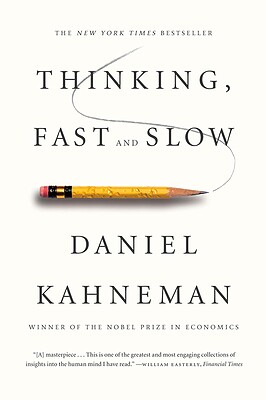
In modern cognitive psychology, Daniel Kahneman illuminates the intuitive side of inference. In Thinking, Fast and Slow, he notes how we construct coherent narratives rapidly, often at the expense of accuracy: “The confidence people have in their beliefs is not a measure of the quality of evidence but of the coherence of the story the mind has managed to construct.” This highlights a double-edged sword: Fast inference enables quick predictions (essential for social intelligence), but biases can lead astray. Sociologists might see echoes here in how groups infer shared realities, sometimes coherently yet falsely.
Contemporary neuroscience and philosophy of mind take this further, framing the brain itself as an inference machine geared toward prediction. Andy Clark, in his work on predictive processing, argues that perception is a kind of “controlled hallucination” guided by top-down predictions, constantly refined by error signals. The brain doesn’t passively receive the world; it actively infers it to minimize surprise.
Karl Friston, architect of the free-energy principle and active inference, pushes this elegantly: “An agent does not have a model of its world—it is a model.” In this view, intelligent systems (brains, organisms, perhaps AIs) minimize prediction errors through action and perception, embodying inference at every level.
Finally, in the realm of artificial intelligence, Yann LeCun (a pioneering mind in deep learning) cuts to the chase: “Prediction is the essence of intelligence.” This resonates across disciplines—if intelligence is measured by how well a system anticipates and adapts, then mastery of inference is non-negotiable.
Why This Matters: Curiosity About the Predictive Mind
Reflecting on these voices, I’m struck by a unifying thread: Intelligence isn’t static knowledge or raw computation, but dynamic inference yielding predictive power. This explains why humans excel in uncertain, social environments—we infer intentions, cultural shifts, and causal chains with nuance that machines still struggle to match.
Yet questions linger, inviting further inquiry: In an era of AI surpassing human prediction in narrow domains, does this redefine intelligence? How do societal structures (power, inequality) shape collective inference, as sociologists might probe? And philosophically, if prediction rests on fallible habits (à la Hume), is true intelligence about refining those habits through reflection?
I suspect yes. The most intelligent minds—yours included, dear reader—are those that infer not just accurately, but curiously, ever testing predictions against the unfolding world.
What do you think? Does inference strike you as the heart of intelligence, or is something else missing? I’d love to hear your inferences in the comments.